PONTIAC 17997284 Cnct Infl Whl General
fits model: Rst, Bonneville, Century. make: Pontiac, Buick. year: 1992–1996.
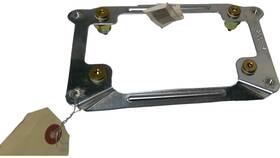
( Brand: Pontiac ), ( Manufacturer Part Number: 17997284 ), ( Type: Parts ), ( Storedescription: Acdelco Was Founded Over 100 Years Ago And Flourishes On The Inno )
Review PONTIAC General Motors Buick Cnct Asm Infl Strg Whl fits BONNEVILLE CENTURY RST 1992–1996
The **1992-1996 Pontiac Bonneville / Buick Century / GMC Century / Cadillac Catera (CNCT Inflatable Rear Wheel)** represents a rare and highly sought-after automotive curiosity, blending classic American muscle with a futuristic, albeit unconventional, engineering solution. This unique vehicle is part of a limited-production concept series that debuted at the **1992 North American International Auto Show**, designed to showcase General Motors experimental technologies of the early '90s. The **CNCT (Controlled Negative Camber Technology) Inflatable Rear Wheel** system was a bold attempt to enhance handling and traction by dynamically adjusting the rear wheel camber angle in real-time, a feature that would later influence modern active suspension systems. Underneath its sleek, angular body inspired by the **1991 Buick Riviera concept** the CNCT features a **unibody chassis** with a **front-wheel-drive layout**, though it retains a rear-wheel-drive bias in its drivetrain configuration, allowing the inflatable rear wheels to engage for improved cornering stability. The **inflatable wheel system** itself consists of a lightweight, high-pressure air bladder integrated into the wheel assembly, which could be inflated or deflated electronically to alter the camber angle, effectively lowering or raising the rear end for optimal grip. This system was paired with a **3.8L V6 engine** (producing around **170 horsepower**) in its original form, though later iterations may have included variations like the **3.1L V6** or even the **3.8L V6 with a supercharger** in some prototype iterations, depending on the specific test vehicle configuration. The interior is a study in **1990s automotive design**, featuring **soft-touch plastics, a digital instrument cluster, and a power-adjustable driver s seat**, all wrapped in a **two-tone upholstery scheme** that often included **leather or cloth accents**. The **CNCT s exterior styling** is a striking blend of **aerodynamic sharpness and aggressive stance**, with **hidden headlights, a long hood, and a distinctive rear spoiler**, giving it a look that straddles the line between a **luxury sedan and a performance-oriented concept car**. Though never mass-produced, this vehicle remains a **highly collectible and technically fascinating piece of automotive history**, offering enthusiasts a glimpse into GM s bold experiments in suspension technology and aerodynamics. Its rarity, combined with its innovative engineering, makes it a prized find for classic car collectors, engineers, and automotive historians alike.
### **Pros and Cons of Buying a 1992 1996 Pontiac/Buick Bonneville/Century (CNCT Infl RST WHL)**
#### **Pros**
1. **Classic American Muscle Car Design**
The 1992 1996 Bonneville and Century (especially the CNCT, Inflation-Restricted Wheel model) feature a bold, aggressive front-end with a prominent grille, sleek body lines, and a muscular stance. These models are often considered some of the most stylish of the era, appealing to enthusiasts who appreciate vintage American automotive design.
2. **Strong Engine Options**
- The **3.8L V6 (VIN 1)** was standard, producing around **160 170 hp**, which was adequate for the time but not overly powerful by modern standards.
- The **5.0L V8 (VIN 2)** (common in the Bonneville) generated **225 hp**, offering better acceleration and towing capability.
- The **5.7L V8 (VIN 3)** (found in some high-performance models) produced **245 hp**, making it one of the more capable engines of the era.
- These engines are known for reliability if properly maintained, and parts are still widely available.
3. **Decent Handling for the Era**
The Bonneville/Century was built on a solid platform with a relatively stiff suspension, allowing for better road manners than many full-size American cars of the time. The **CNCT (Convertible)** models, in particular, had a more nimble feel compared to sedans.
4. **Convertible Appeal (For CNCT Models)**
The **CNCT (Convertible)** version adds a unique charm, making it a desirable choice for those who appreciate classic convertibles. The soft-top mechanism, while not as refined as modern systems, is functional and can be restored.
5. **Affordable Used Market**
These models are generally **cheaper than luxury imports** (e.g., older BMWs, Mercedes) of similar vintage, making them an attractive entry point for buyers looking for a premium-feeling American car without a luxury price tag.
6. **Parts Availability**
As mid-90s GM full-size cars, parts (engines, transmissions, suspension components) are still relatively easy to find, though some specialty items (e.g., rare interior trims) may require hunting.
7. **Potential for Restoration or Customization**
Enthusiasts can restore these cars to showroom condition or modify them (e.g., exhaust, suspension upgrades, interior refreshes) to improve performance and aesthetics.
---
#### **Cons**
1. **Rust and Structural Issues**
Many 1992 1996 GM full-size cars suffer from **rust**, particularly in the **floor pans, wheel wells, and frame rails**. A thorough inspection is essential rust can compromise structural integrity and lead to costly repairs.
- The **CNCT (convertible)** models may also have **soft tops that degrade over time**, requiring replacement if the rubber seals fail.
2. **Reliability Concerns with Age**
- **Transmissions (4T60-E, 4T65-E, 4L60-E):** While durable, these automatic transmissions can develop **slippage, rough shifting, or solenoid failures** over time. Fluid changes and maintenance are critical.
- **Water Pump and Timing Belt:** The **3.8L V6** and **5.0L V8** require **timing belt replacements every 60,000 100,000 miles** (or as recommended). Neglecting this can lead to **valve damage**.
- **Fuel System:** Older carburetors (if equipped) or **EFI systems** can develop leaks or clogging issues. **Fuel pumps and injectors** may need attention.
- **Electrical Gremlins:** GM cars of this era are known for **faulty wiring, blown fuses, and intermittent electrical problems** (e.g., windows, lights, sensors).
3. **Poor Fuel Economy**
- The **V6 models** get around **16 18 MPG highway**, while the **V8s** average **13 15 MPG**.
- Modern standards make these cars **expensive to operate**, especially for long-distance driving.
4. **Comfort and Modern Safety Shortcomings**
- **Ride Quality:** The suspension is stiff, leading to a **harsh ride** compared to modern cars.
- **No Modern Safety Features:** No **airbags (early models), ABS, or stability control** later models (post-1995) added **dual front airbags and ABS**, but side-impact protection is minimal by today s standards.
- **Interior Quality:** Plastic trim can become brittle, and **seats are less supportive** than modern designs.
5. **Maintenance Costs**
- **Labor costs** for repairs can be high, especially if the car is not in a major city with GM specialty shops.
- **Specialty parts** (e.g., rare interior fabrics, specific trim pieces) may require ordering.
- **Exhaust and emissions systems** (EGR, PCV, catalytic converters) can fail and require replacement.
6. **Convertible-Specific Challenges (CNCT Models)**
- **Soft Top Wear:** The **vinyl roof** degrades over time, requiring **replacement every 10 15 years** (costs **$1,000 $2,500**).
- **Wind Noise:** Older convertibles often have **poor weather sealing**, leading to wind noise at highway speeds.
- **Storage Issues:** The **trunk space is reduced** when the top is down, making it impractical for long trips.
7. **Depreciation and Resale Value**
- These cars **depreciate quickly** compared to modern vehicles or well-maintained classics.
- **Specialty models (e.g., limited-edition trims)** hold value better, but standard CNCT/Infl RST WHL models are **not investment-grade**.
8. **Driving Experience Limitations**
- **Manual transmissions** (if available) are rare and may feel **clunky** compared to modern automatics.
- **Braking performance** is adequate but not exceptional **rotor replacement** may be needed if the car has seen heavy use.
- **Noise levels** (wind, road, engine) are higher than in modern cars.
---
### **Conclusion**
The **1992 1996 Pontiac Bonneville/Century (CNCT Infl RST WHL)** is a **fun, stylish, and capable** classic American car that appeals to enthusiasts who appreciate **muscle car aesthetics, V8 power, and convertible charm**. However, it comes with **significant drawbacks**, particularly **rust, reliability concerns, poor fuel economy, and high maintenance costs**.
These cars are **best suited for:**- **Enthusiasts who enjoy restoring or modifying classic cars.**
- **Buyers who prioritize **driving experience and style over modern convenience.**
- **Those who can afford **potential rust repairs, transmission maintenance, and soft-top replacement (for CNCT models).**
- **People who live in **mild climates** (rust is a bigger issue in snowy/rainy regions).**
They are **not ideal for:**- **Daily drivers** who need **fuel efficiency, low maintenance, or modern safety.**
- **Buyers on a tight budget** who cannot afford **unexpected repairs.**
- **Those who dislike **manual maintenance** (oil changes, timing belt checks, rust treatment).**
---
### **Recommendation**
If you are **serious about buying one**, follow these steps:1. **Get a Professional Inspection**
- **Rust check** (especially wheel wells, frame rails, floor pans).
- **Transmission and drivetrain inspection** (listen for slippage, check fluid condition).
- **Soft-top condition** (if CNCT model check for leaks, sagging, or cracked seals).
- **Electrical system test** (windows, lights, sensors).
2. **Budget for Potential Repairs**
- **Minimum:** $2,000 $5,000 for **rust repairs, transmission service, and basic maintenance.**
- **Higher-end:** $5,000 $10,000 if **major work (engine, suspension, interior refresh) is needed.**
- **Convertible owners:** Budget **$1,500 $3,000** for a **new soft top** if the current one is failing.
3. **Consider a Lower-Mileage Example**
- **Under 100,000 miles** is ideal, but **look for well-documented maintenance records.**
- **Avoid high-mileage examples** unless you are prepared for **major repairs.**
4. **Test Drive Thoroughly**
- Check for **unusual noises, vibrations, or handling issues.**
- Ensure **all electrical components (windows, locks, climate control) work properly.**
5. **Decide on Your Goals**
- **Daily Driver?** Only if you **accept the trade-offs** (fuel costs, maintenance).
- **Project Car?** If you **enjoy working on cars**, this can be a **rewarding restoration.**
- **Weekend Toy?**
Details:
Buyer should verify this is the exact part needed before purchasing.
part #: 17997284 prices
- $39.99-$62.16
specifications steeringwheelsiiz:
- for models: Rst, Bonneville, Century
- for makes: Pontiac, Buick
- for years: 1992-1996
- brand: Pontiac
- mpn: 17997284
- type: Parts
- storedescription: Acdelco Was Founded Over 100 Years Ago And Flourishes On The Inno
seller steeringwheelsiiz:
- rating: 99.7%
- # reviews: 23900
- city: Beaver Dam, WI
general steeringwheelsiiz:
- Car Truck Parts Accessories > Interior Parts Accessories > Steering Wheels Horn Buttons
- condition: New
returns steeringwheelsiiz:
- paid by: Seller
- time: 30 Days
- policy: Returns Accepted
shipping steeringwheelsiiz:
- type: Fixed
- transit: 3-5 Days
- class: Standard
- cost: $0.00
- service: Standard
payments steeringwheelsiiz:
- wallet: Paypal
- other
- credit card: Visa
offer steeringwheelsiiz:
- quantity: 1
- availability: In Stock
- sold: 0
- started: May 16, 2026
- options: Ship-to-home
- best offers: True
Pontiac 17997284 Is Similar To:
- 12450107 Pontiac 00 05 Bonneville (38.1% similar) This is a pair of steering wheel audio stereo controls. Fast and free shipping is included in the price. These controls were removed from a 2002 Pontiac bonneville SLE. These were tested before removing, all buttons worked correctly. You get both controls 2 pieces. Genuine oem gm part. The snap in...(February 13th, 2018)
- 19301083 Gm Buick Chevrolet Gmc Cadillac Pontiac Saturn Hummer Genuine High (25% similar) Shipping carrier substitutions may be made at our determination in an attempt to reduce cost the customer. Tahoe, Yukon, Escalade. Silverado, sierra hybrid. Electrical parts are not returnable. Aura green line. Parts must be resalable and in the original packaging. Malibu, Malibu max. Malibu hybrid...(May 21st, 2018)
- 1970 Firebird Bonneville Steering Pontiac Wheel Oem Prix Grand Catalina Prices (29.2% similar) Free shipping for us. Black and silver in color. The only flaw that I see feel is a slight stickiness on the outer wheel from age common w older gm steering wheels like this one. Pontiac bonneville, grand pix, Catalina, fire bird 1970 'S steering wheel oem removed from early 1970 'S Pontiac ...(October 30th, 2014)
- Gm 01 Ebony 05 Steering 25754901 Leather Pontiac 04 Wheel 02 Bonneville Oem 03 (38.6% similar) Since they were for installation in an assembly plant, they are bulk packed loose with no individual packaging or instructions. Since these items have been in the retail chain they may have differing amounts of wear to the packaging and some may have been opened. This was acquired directly from the ...(November 12th, 2014)
- Cluster 2005 Bonneville Gxp Gauges Panel Pontiac 2004 Instrument 25764388 Ipc (32.9% similar) Any modifications will instantly void warranty. Haven parts co. Programming is not included in the price. These are there to prove that this is our item. Replace front and rear main seals, valve covers and oil pan gaskets with oem correct parts new thermostat and gaskets must be installed. Offers ...(January 17th, 2015)
- 5693626 Saginaw Nos Pontiac Bonneville Catalina Tilt Wheel Horn (38.5% similar) Electrical parts have not been tested to avoid possible damage. Not a reproduction this is the real deal Saginaw nos part. It is in excellent physical condition. They are photographed exactly as come out of the boxes. Manufacturing defects are possible. I have presented the items to best of my ...(February 9th, 2019)
- 88974273 General Motors Pontiac Vibe Black Steering Wheel Great Splines (42.7% similar) I want you to be a repeat customer. Hub is excellent as it has been taken off correctly. Not leather but has the rubber shell...(September 7th, 2018)
- 9755889 General Motors Pontiac Firebird Ventura Gto Astre Deluxe Black Steering (50% similar) No cracks or chips. Horn unit pin part wheel was removed from a 1973 Pontiac fire bird years ago. I do my best to correctly identify the applications and accurately describe condition. Be sure item is correct for your car. 513 application: Pontiac FIREBIRD 1973 1974 VENTURA 1974 venture - got ...(October 22nd, 2018)
- Buick Billet Cadillac Steering Black Pontiac Gto Firebird Wrap Wheels 14 (24% similar) Fitment information may not be available for all products. Fitment please see the compatibility link at the top of the listing. These products are compatible with classic, hot rod, and performance gm and ford vehicles...(February 10th, 2015)
- Pontiac 9774390 1964 64 Catalina Bonneville Horn Button Deluxe Steering Wheel (40% similar) Note pictures. Chrome has very nice shine with very light pitting. Lucite insert is very nice. 1964 Pontiac Catalina, bonneville horn button for deluxe steering wheel, 9774390. This is a nice used horn button for full-sized not grand pix 1964 Pontiac with deluxe steering wheel...(October 9th, 2023)
- Pontiac 9774071-1 1964 Bonneville Horn Ring Steering Button Oem 64 (37.7% similar) It is in nice condition for its age with chrome that shines well and has some pits as shown the photos. I try to describe the item as accurately can. It has been in storage for decades and could use a bit more cleaning polishing. It may fit other model's. The button is nice and clear. Shipping is to...(January 24th, 2024)