BMW 61319474852 Lci Steering Angle Sensor Slip Ring Clock 61316996593 Spring
fits model: F32, F30, F36, F33, F22. make: Bmw.
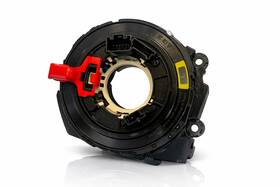
( Manufacturer Part Number: 61319474852 ), ( Fitment Type: Direct Replacement ), ( Color: Black ), ( Items Included: Just Unit ), ( Mounting Hardware Included: No ), ( Material: Plastic ), ( Placement On Vehicle: Front ), ( Type: Clock Spring ), ( Ipn: 61316996593 ), ( Manufacturer Warranty: 2 Years ), ( Oe/oem Part Number: 61319490789, 61319474852 ), ( Country Of Origin: Germany ), ( Horn Type: Electric )
Review BMW Lci Steering Angle Sensor Slip Ring Clock Spring fits F32 F30 F36 F33 F22
The **BMW Steering Angle Sensor Slip Ring (Part Number: 61319474852)** is a critical component designed to ensure precise and reliable operation of the Electronic Steering Angle (ESA) system across a broad spectrum of BMW models, including the **F32 (5 Series), F30 (3 Series), F36 (4 Series), F33 (Gran Turismo), and F22 (M235i/M240i)** as well as the **LCI (Long Chassis Interior) variants** of these vehicles. This high-performance slip ring assembly serves as the pivotal interface between the steering column s mechanical rotation and the electronic steering angle sensor, enabling seamless data transmission while accommodating the dynamic movement of the column, particularly in vehicles equipped with tilt-and-telescoping steering wheels.
Engineered to meet BMW s stringent quality and durability standards, this slip ring incorporates a robust **multi-contact slip ring mechanism** that maintains consistent electrical connectivity even under the repeated flexing and twisting stresses inherent in modern steering systems. The design integrates a **clock spring (torque ring)**, a precision-wound conductive coil that compensates for the steering column s angular displacement, ensuring that the steering angle sensor receives accurate positional feedback regardless of the wheel s tilt or adjustment. This is particularly vital for advanced driver-assistance systems (ADAS), such as lane-keeping assist, traction control, and stability programs, which rely on real-time steering angle data to enhance vehicle responsiveness and safety.
Constructed from high-grade materials, the slip ring features **corrosion-resistant contacts and a durable housing** to withstand environmental challenges, including moisture, dust, and temperature fluctuations, which are common in both urban and highway driving conditions. The assembly is meticulously calibrated to minimize signal interference, reducing the risk of false readings that could compromise the vehicle s electronic stability control (ESC) or infotainment system integration. For BMW owners seeking to restore or upgrade their steering systems whether due to wear, replacement, or customization this slip ring offers a direct-fit solution that aligns with OEM specifications, ensuring compatibility with the **LCI (Long Chassis Interior) models** and other variants within the F3x series.
Beyond its functional excellence, this component exemplifies BMW s commitment to seamless integration within the broader vehicle architecture. The slip ring s design harmonizes with the **clock spring assembly**, allowing for smooth operation of power-adjustable steering wheels while preserving the integrity of the steering angle sensor s electrical pathways. Whether installed during routine maintenance, a steering column replacement, or a performance-oriented modification, this part guarantees that the vehicle s electronic systems remain synchronized with the driver s inputs, delivering the refined handling and precision steering that BMW enthusiasts expect. For technicians and DIYers alike, its universal applicability across multiple model years and series makes it an indispensable addition to any BMW repair or upgrade project.
### **Pros and Cons of Buying a Used BMW with the Specified Models (F32, F30, F36, F33, F22) and Common Issues (Steering Angle Sensor, Slip Ring, Clock Spring)**
#### **Pros of Buying a Used BMW (F32, F30, F36, F33, F22 Series)**
1. **Premium Driving Experience** BMWs in these generations (F30, F32, F33, F36, F22) are known for their refined handling, comfortable interiors, and engaging driving dynamics. The F30 (3 Series) and F32 (5 Series) are particularly well-balanced, offering a mix of sportiness and practicality.
2. **Strong Resale Value** BMWs retain their value relatively well compared to many competitors, making them a solid long-term investment if maintained properly.
3. **Advanced Technology & Features** Many of these models come with modern infotainment systems (iDrive), adaptive cruise control, parking sensors, and available luxury features like heated seats and ambient lighting.
4. **Reliability Improvements Over Older Models** Later F30/F32/F33/F36 models (post-2015) benefited from BMW s refinements in engine tuning, transmission quality, and electrical systems, reducing some of the earlier generation s common issues.
5. **Aftermarket & Parts Availability** BMW has a vast aftermarket support, meaning parts (including the steering angle sensor, slip ring, and clock spring) are widely available, and mechanics are familiar with these models.
6. **Potential for Customization** BMW s open architecture allows for tuning, suspension upgrades, and performance modifications, making them appealing to enthusiasts.
7. **Comfort & Practicality** The F30 (3 Series) and F32 (5 Series) offer spacious interiors, good cargo space, and a quiet cabin, making them suitable for daily driving.
---
#### **Cons and Common Issues to Consider**
1. **Electrical & Sensor Problems**
- **Steering Angle Sensor (SAS) Issues** A faulty steering angle sensor can cause the "Check Steering Angle Sensor" warning light, steering assist failure, or even immobilizer issues. Replacement is relatively straightforward but can be costly if labor is expensive.
- **Slip Ring (iDrive/Infotainment) Failures** The slip ring (a rotating electrical connection in the steering column) can wear out, causing iDrive malfunctions, unresponsive buttons, or complete system lockouts. Replacement is labor-intensive and often requires removing the steering column.
- **Clock Spring Failures** The clock spring (which powers the steering wheel controls and immobilizer) can degrade over time, leading to steering wheel button failures or immobilizer issues. Replacement is messy and time-consuming.
2. **Transmission & Drivetrain Concerns**
- **ZF 6HP21/6HP24 Automatic Transmission Issues** Some F30/F32/F33 models (especially pre-2016) have reported transmission rough shifting, delayed engagement, or solenoid failures. Later models improved reliability, but fluid changes are critical.
- **N63 (3.0L Twin-Turbo) Engine Problems** The N63 engine (found in some F30/F32/F33 models) is known for carbon buildup, oil consumption, and timing chain wear. Regular maintenance (valve cleaning, oil changes) is essential.
- **N55 (2.0L Turbo) Reliability** While generally robust, the N55 can suffer from carbon buildup, oil leaks (valve cover gasket), and occasional turbocharger issues if not maintained properly.
3. **Suspension & Steering Wear**
- **Worn Bushings & Control Arms** The F30/F32/F33 models can develop soft or noisy suspension components (ball joints, sway bar links, subframe bushings) due to BMW s use of plastic/elastomeric parts.
- **Power Steering Fluid Leaks** The electric power steering (EPS) system can develop leaks from the steering rack or hoses, requiring attention.
4. **Interior & Build Quality Complaints**
- **Plastic Feel in Lower Trim Levels** Some buyers find the interior materials (especially in LCI or lower-trim models) to be less premium than competitors.
- **iDrive Lag & Software Glitches** Older iDrive systems (pre-iDrive 7) can be slow or unresponsive, and software updates may not be available for very old models.
5. **Maintenance Costs**
- **High Repair Bills** BMWs are expensive to maintain, especially if dealing with electrical issues, transmissions, or complex engine problems. Parts and labor can be costly compared to Japanese or German rivals.
- **Specialist Knowledge Required** Some issues (e.g., slip ring, clock spring) require BMW-specific mechanics, increasing repair costs.
6. **Depreciation & Market Saturation**
- **Rapid Depreciation** BMWs lose value quickly, especially in high-mileage examples. Used market saturation means you may pay a premium for a well-maintained example.
- **Competitor Alternatives** Audi A4, Mercedes C-Class, and Lexus IS offer similar features with sometimes better reliability and lower long-term costs.
---
### **Key Considerations Before Buying**
1. **Check Maintenance Records** Ensure the car has had regular oil changes (every 10,000 15,000 miles), transmission fluid changes, and no neglect in critical areas (e.g., timing chain, suspension).
2. **Test the Steering Angle Sensor & Electrical Systems** Have a mechanic verify that the SAS, slip ring, and clock spring are functioning. A faulty slip ring can be a dealbreaker.
3. **Inspect the Transmission** Listen for rough shifting or delayed engagement. A pre-purchase inspection (PPI) is highly recommended.
4. **Verify Body & Rust** BMWs in wet climates can develop rust in wheel wells, undercarriage, and frame rails. Inspect thoroughly.
5. **Negotiate Based on Issues** If the car has known problems (e.g., slip ring failure), factor in repair costs when negotiating the price.
6. **Consider a Certified Pre-Owned (CPO) Example** If available, a CPO BMW comes with a warranty and has been inspected, reducing risk.
---
### **Final Recommendation**
**Buy a Used BMW (F30/F32/F33/F36/F22) If:**- You prioritize driving enjoyment and are willing to budget for maintenance.
- The car has **full maintenance records**, especially for the **transmission, timing chain, and electrical systems**.
- You **inspect critical components** (slip ring, clock spring, SAS) before purchase.
- You re prepared for **higher repair costs** than average cars.
- You prefer **German engineering and build quality** over long-term cost efficiency.
**Avoid or Be Extremely Cautious With:**- **High-mileage examples (over 100,000 miles)** without proof of maintenance.
- **Cars with electrical gremlins** (repeated iDrive/slip ring issues).
- **N63 engine models** unless you re confident in oil management and valve cleaning.
- **LCI or entry-trim models** if you expect premium interior quality.
**Best Value Picks Within These Models:**- **F30 330i (N55 engine)** Reliable, good balance of power and efficiency.
- **F32 530i (N55 engine)** More spacious than the F30, still manageable in maintenance.
- **F33 330i (N55)** Similar to F30 but with a slightly more refined ride.
- **F22 M235i (if available)** A more affordable, performance-oriented option with a twin-turbo 4-cylinder.
**Alternative Recommendations:**- If reliability is a top priority, consider a **well-maintained Audi A4 (B8/B9), Mercedes C-Class (W205), or Lexus IS (300/350)**.
- For a more budget-friendly BMW experience, look for a **used F10/F11 (E90/E92 3 Series, pre-2010)** if you re okay with older tech and higher maintenance risks.
**Final Verdict:**A used BMW from these generations can be a fantastic car if you **do your due diligence, budget for potential issues, and prioritize maintenance**. However, it s not the most cost-effective choice long-term. If you re an enthusiast who values driving dynamics and are prepared for the challenges, it s a rewarding purchase. For those seeking lower hassle, alternatives may be worth considering.
Details:
M2 Competition. All tech data details in the listings section are provided from official manufacturers' tech databases. 218d 218i 220d 220dX 220i 225d 230i 230iX M240i M240Ix. IT FITS: 2' F22 LCI.
2' F87 M2 LCI.
part #: 61319474852 prices
- $180.58-$189.99
specifications steeringwheelsiiz:
- for models: F32, F30, F36, F33, F22
- for makes: Bmw
- mpn: 61319474852
- fitment type: Direct Replacement
- color: Black
- items included: Just Unit
- mounting hardware included: No
- material: Plastic
- placement on vehicle: Front
- type: Clock Spring
- ipn: 61316996593
- manufacturer warranty: 2 Years
- oe/oem part number: 61319490789, 61319474852
- country of origin: Germany
- horn type: Electric
seller steeringwheelsiiz:
- city: Fairview, New Jersey
- # reviews: 1468
- rating: 98.9%
general steeringwheelsiiz:
- condition: New
- Car Truck Parts Accessories > Interior Parts Accessories > Steering Wheels Horn Buttons
shipping steeringwheelsiiz:
- transit: 3-7 Days
- type: Fixed
- class: Expedited
- cost: $0.00
- carrier: USPS
- service: USPS Priority Mail
payments steeringwheelsiiz:
- credit card: Visa
- wallet: Google-pay
- other
returns steeringwheelsiiz:
- time: 30 Days
- policy: Returns Accepted
- paid by: Seller
offer steeringwheelsiiz:
- sold: 0
- options: Ship-to-home
- quantity: 2
- availability: In Stock
- started: February 24, 2026
Bmw 61319474852 Is Similar To:
- 01606300089 Bmw 2003-2008 Z4 E85 Steering (26% similar) Wrong year,condition,stated, working condition of item. All pictures directed are for illustrations purposes only please send me a message or. Items illustrated are used and will have signs of wear tear contact main st AUTO310...(February 10th, 2017)
- 0390201680 Bmw Steering Column Horizontal Motor Actuator Oem (26.7% similar) Free shipping is within the continental us...(September 22nd, 2018)
- 0683088 Bmw 428i Sport Steering (26.4% similar) This item came off a 2015 bmw 428I x drive grand coupe with 6000 miles on the odometer. It has nothing to do with us or. Please refer to the photos of item for most accurate. These parts are in fully working condition unless other wise mentioned. Bmw 428I sport steering wheel 3 spoke paddle ...(June 10th, 2017)
- 1 092 038 Bmw Steering Wheel Leather Oem (26.2% similar) This listing is for a bmw oem steering wheel leather will fit no return as exceptions. Please dont buy this for diagnosing a problem, only if you know need the part. Item must be return in the same condition it was received. These parts are not for trouble shooting testing. The part must not be ...(March 4th, 2019)
- 1028524 Bmw Rex Steering Wheel Assembly (29.5% similar) ...(August 22nd, 2018)
- 106261118 2007-2010 Bmw 328 Series Steering Wheel Leather Oem 8012d (29.3% similar) Or view all 328 series parts. This will fit bmw 328 series E91 W/O sport pkg, leather, w Miltonic bmw 328 series E90 flash from the camera alters the color visible. Expedited shipping is not available. One person may see a medium gray, the other may see dark gray. Buyer customer cannot arrange their...(December 10th, 2015)
- Steering Wheel 1994 1995 Bmw 325i E36 M-tech 4 Spoke Air Bag 109422 (25.5% similar) Fresh parts cars arriving daily and listed on. All Bavarian parts are inspected, pre tested, and include our standard 6 month unlimited mileage warranty. This option removes all dirt, grease, and grime Nash and provides a look and feel closer to that of new part. And all Bavarian jet cleaned parts ...(December 12th, 2015)
- 740i 18 1094260 540i E39 Bmw 740il E38 530i Leather 525i Heated Steering Wheel (32.1% similar) Use this part to instantly update the interior appeal of your bmw. Part number 32. It's also in great physical and cosmetic shape, however there may be imperfections from normal wear see pictures below. Please compare to make sure yours matches. Actual part pictured. This part is guaranteed to be in...(June 20th, 2014)
- 1095 633 A5 Bmw Steering Wheel With Radio Voice Cruse Control Buttons Air (33.1% similar) For sale is a 2001 bmw 740I steering wheel with radio audio and cruse control buttons air bag. It comes with a 30 day money back guarantee. Please for shipping cost outside of the 48 continental states and USA. Item is in good working and cosmetic condition...(July 30th, 2018)
- 1095824 Bmw E38 E39 95 98 Steering Lock Housing With Ignation Switch Oem (33.3% similar) Fully functional unit with ignition switch attached to unit, comes out from a sport, running vehicle. For sale a used, but excellent condition steering lock ignition cylinder housing unit. Shipping is will fit all E39 FROM95 to manufacturing date...(November 14th, 2015)
- Column 1102760 Lifetime Warranty Key 01 Bmw Steering 02 03 525i Blk Assy (24.7% similar) All notes in that section box must be matched to verify fitment for your vehicle. Q I see a different part on this vehicle that I would like to buy. Ask any and all questions before the you purchase. Rates for USPS service start at 40 and can go much higher for some countries. If the column notes ...(July 7th, 2014)