SAAB 5331202 Clock Spring 9/5 9/3
fits make: Saab. year: 1999–2002.
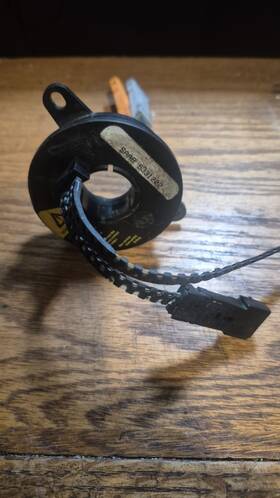
( Manufacturer Part Number: 5331202 ), ( Part Type: Spring Clock ), ( Material: Plastic ), ( Features: Airbag ), ( Universal Fitment: No ), ( Country Of Origin: Germany )
Review SAAB 9-5 9-3 Factory Clock Spring Part# fits 1999–2002
The **Saab 9-3 ( 99- 02) and Saab 9-5 ( 99- 01) Clock Spring (Part #5331202)** is a critical electrical component that plays a pivotal role in the proper functioning of the vehicle s ignition system, steering angle sensor, and anti-theft security features. Located within the steering column, this clock spring is a precision-engineered assembly designed to maintain a continuous electrical connection between the steering wheel and the vehicle s control modules, even as the wheel rotates freely. Crafted from durable materials, including high-grade conductive wiring and reinforced insulation, it ensures seamless data transmission between the steering angle sensor and the car s ECU (Engine Control Unit), which is essential for accurate airbag deployment, traction control, and stability systems. Over time, wear and tear such as frayed wiring, corrosion, or misalignment can compromise its performance, leading to erratic electrical signals, malfunctioning anti-theft systems, or even complete failure of the steering angle sensor, which could trigger a check engine light or disable critical safety features. This part is a direct-fit replacement for Saab models from 1999 to 2002, ensuring compatibility with both the **9-3 (B-Platform)** and **9-5 (9X3)**, making it an indispensable upgrade for restorers, mechanics, and owners seeking to restore or maintain optimal electrical integrity in their vehicles. Whether addressing a faulty sensor, replacing a damaged assembly, or performing a full steering column rebuild, this clock spring guarantees reliable connectivity and long-term durability, helping to preserve the driving dynamics and safety performance of these iconic Saab models.
### **Pros and Cons of Buying a Saab 9-5 (1999 2002) or Saab 9-3 (1999 2002) with a Faulty Clock Spring**
#### **Pros**
1. **Reliable Engines (for the era)**
- The 9-5 (1999 2002) and 9-3 (1999 2002) models were equipped with Saab s **2.3L turbocharged (B234T) and naturally aspirated (B234) engines**, which were generally robust for their time. The turbocharged version, in particular, was well-regarded for its power and durability if maintained properly.
- The **2.0L turbo (B204T)** in the 9-3 was also a solid choice, though slightly less powerful than the 2.3L.
2. **Comfortable and Spacious Interiors**
- Both models offered **generous legroom, a high seating position, and a relaxed ride**, making them comfortable for long drives.
- The **9-5** had a more premium feel with better sound insulation, while the **9-3** was more compact but still roomy for its class.
3. **Good Handling and Driving Dynamics**
- Saab s **front-wheel-drive layout with MacPherson struts** provided a balanced driving experience, though not as sharp as German rivals.
- The **9-5** had a more composed demeanor, while the **9-3** was more nimble and fun to drive, especially with the optional **5-speed manual or 6-speed automatic**.
4. **Safety Features (for the time)**
- Both models came with **standard ABS, dual airbags, and side impact protection**, which were advanced safety features in the late '90s.
- The **9-5** had a more robust chassis, making it slightly safer in collisions compared to the 9-3.
5. **Resale Value (for classics)**
- While not as valuable as some European or Japanese imports, Saabs from this era are **collectible in certain circles**, especially well-maintained examples.
- The **9-5** holds its value slightly better than the 9-3 due to its larger size and premium positioning.
6. **Modding Potential**
- The **turbocharged engines (B234T, B204T)** are popular among tuners, with aftermarket support for **turbo upgrades, intake/exhaust mods, and ECU tuning**.
- The **9-3 s smaller size** makes it easier to modify for track use or street performance.
7. **Unique Saab Character**
- Saabs of this era have a **distinctive Scandinavian design** and a **comfort-driven approach to driving**, which appeals to those who prefer a relaxed yet capable car.
- The **9-5 s boxy yet aerodynamic shape** and the **9-3 s angular styling** give them a recognizable, retro appeal.
---
#### **Cons**
1. **Clock Spring Issues (Major Concern)**
- The **clock spring** (part of the steering column that powers the steering wheel locks and some electronics) is a **common failure point** in Saabs from this era.
- **Symptoms of a bad clock spring:**- Steering wheel locks not disengaging properly.
- Intermittent electrical issues (e.g., radio, lights, or warning lights flickering).
- Physical damage to the spring (visible cracks or deformation).
- **Replacement cost:** Typically **$300 $600** (parts labor), depending on the dealer or shop.
- **Risk:** If the spring fails completely, the steering wheel may **lock in place**, making the car undrivable until the spring is replaced.
2. **Electrical Reliability Problems**
- Saabs of this era are **known for electrical gremlins**, including:- Faulty **fuse boxes** (often requiring frequent replacements).
- **Intermittent wiring issues** (especially in older models).
- **Infotainment system failures** (CD changers, radios, or climate control malfunctions).
- **Solution:** Regular electrical system checks and **upgrading to modern wiring** can help, but this is an ongoing concern.
3. **Transmission Issues (Automatic Models)**
- The **5-speed automatic (ZF 5HP19) in the 9-5** and **6-speed automatic (ZF 6HP22) in the 9-3** can develop **slippage, rough shifting, or solenoid failures** over time.
- **Manual transmissions** are generally more reliable but still require **regular fluid changes** to avoid wear.
4. **Rust and Corrosion (Especially in Older Models)**
- Many Saabs from the late '90s suffer from **rust in the wheel arches, sills, and undercarriage**, particularly if they were driven in **salted climates**.
- **Pre-purchase inspection is critical** look for **excessive rust, body panel replacements, or undercoating damage**.
5. **Maintenance Costs Can Be High**
- Saabs are **not as common as Volkswagens or Toyotas**, meaning **parts can be expensive** (especially for rare or discontinued items).
- **Specialist Saab mechanics** charge premium rates, and **labor costs** can add up quickly.
- **Turbocharged models** require **regular turbo inspections, oil changes, and intercooler maintenance** to prevent costly failures.
6. **Resale Market Limitations**
- Saabs **depreciate quickly** and have a **smaller buyer pool** compared to more mainstream brands.
- **Financing can be difficult** some lenders avoid Saabs due to perceived reliability issues.
- **Insurance costs** may be higher than for similar German or Japanese cars.
7. **Build Quality and Durability Concerns**
- Plastic interior components (dashboards, door panels) were **prone to cracking and warping** over time.
- **Suspension components (ball joints, bushings, control arms)** wear out faster than in many competitors.
- **Brake systems** (especially rear drums in older models) can be **noisy and less efficient** than modern setups.
8. **Limited Modern Safety and Tech Features**
- **No modern driver aids** (ESP, advanced airbags, lane-keeping assist).
- **Outdated infotainment** (if equipped with a CD system, it may be outdated or unreliable).
- **Poor fuel economy** compared to modern hybrids or efficient diesel cars.
---
### **Conclusion**
Buying a **Saab 9-5 (1999 2002) or 9-3 (1999 2002) with a faulty clock spring** is a **high-risk, high-reward** decision. The **pros** such as **comfort, driving dynamics, and modding potential** make these cars appealing to enthusiasts who appreciate their **Scandinavian charm and performance**. However, the **cons**, particularly **electrical issues, transmission problems, and the clock spring failure**, can turn a potentially great car into a **financial and mechanical headache** if not properly addressed.
**If you proceed with the purchase:**- **Budget for the clock spring replacement immediately** (or verify it s already fixed).
- **Get a full pre-purchase inspection** (focus on **rust, electrical systems, and transmission health**).
- **Be prepared for higher maintenance costs** and **limited parts availability**.
- **Consider a manual transmission** if you want better reliability than the automatic.
- **Only buy from a reputable Saab specialist** who can confirm the car s history and condition.
**If you re not comfortable with the risks:**- **Look for a well-documented, low-mileage example** with **full service records**.
- **Consider a more reliable alternative** (e.g., a **BMW 3-Series, Volvo S60, or even a well-maintained Toyota Camry**) if you need a **daily driver**.
- **If you re buying for fun/modding**, accept that **ownership will require more effort and expense** than a mainstream car.
### **Final Recommendation**
**Buy the Saab only if:**You **love Saabs and are prepared for their quirks**.
You **have the budget for potential repairs** (especially electrical and transmission work).
The **clock spring is confirmed fixed** (or you re ready to replace it immediately).
You **enjoy working on cars** and don t mind **higher maintenance costs**.
**Avoid the Saab if:**You **need a reliable, low-maintenance daily driver**.
You **can t afford unexpected repairs** (electrical, transmission, or rust-related).
You **prefer a car with modern safety and tech features**.
**Best Alternative?** If you want a **similar driving experience with better reliability**, consider a **Volvo S60 (1997 2004) or a BMW 3-Series (E46, 1998 2005)** both share Saab s Scandinavian engineering roots but with **fewer electrical gremlins and better long-term reliability**.
Would you like guidance on **specific model years
Details:
The 99-01 Saab 9-5 99-02 9-3 Factory Clock Spring Part# 5331202 is a genuine product made of plastic. This clock spring is important for the proper functioning of airbag system in your Saab, providing a reliable and authentic solution cars interior. It features airbag compatibility and is designed specifically for Saab vehicles, ensuring a perfect fit.
part #: 5331202 prices
- $50.00-$65.00
specifications steeringwheelsiiz:
- for makes: Saab
- for years: 1999-2002
- mpn: 5331202
- part type: Spring Clock
- material: Plastic
- features: Airbag
- universal fitment: No
- country of origin: Germany
shipping steeringwheelsiiz:
- type: Fixed
- service: USPS Ground Advantage
- class: Standard
- cost: $10.00
- carrier: USPS
- transit: 6-13 Days
seller steeringwheelsiiz:
- # reviews: 425
- rating: 100.0%
- city: Amity, Oregon
payments steeringwheelsiiz:
- other
- wallet: Google-pay
- credit card: Diners-club
general steeringwheelsiiz:
- Car Truck Parts Accessories > Interior Parts Accessories > Steering Wheels Horn Buttons
- condition: Used
offer steeringwheelsiiz:
- options: Ship-to-home
- sold: 0
- availability: In Stock
- started: May 15, 2026
- best offers: True
- quantity: 1
returns steeringwheelsiiz:
- policy: No Returns