JAGUAR 33863B Xke Horn
fits make: Jaguar. year: 1971-75.
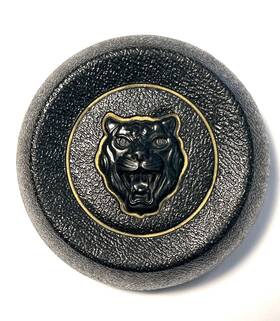
( Manufacturer Part Number: 33863B ), ( Type: Horn Button ), ( Color: Black ), ( Vintage Part: Yes ), ( Country Of Origin: United Kingdom )
Review JAGUAR E type Xke Series Black Gold Horn Button fits 1971-75
The **Jaguar E-Type XKE Series III (33863B) from 1971 to 1975** stands as an unparalleled icon of automotive elegance, blending timeless British craftsmanship with raw, exhilarating performance. This model represents the final evolution of the legendary XKE, refined yet uncompromising in its pursuit of both beauty and speed. The **33863B** designation refers to the **Series III 2 2 coupe**, a masterpiece of mid-century design that seamlessly merges a low, sweeping roofline with a broad, muscular stance, all accentuated by Jaguar s signature tailfins a nod to its racing heritage. The body, crafted from hand-formed steel panels, exudes a sense of understated luxury, with smooth, flowing contours that transition effortlessly from the sweeping hood to the tapered tail. The **2 2 configuration** offers a rare balance, accommodating four passengers while retaining the purist s spirit of a true sports car, thanks to its generous rear seat and practical trunk space.
Underneath its gleaming exterior lies one of the most advanced powertrains of its era. The **Series III E-Type** is powered by Jaguar s legendary **3.0-liter (3,781cc) inline-six engine**, producing a commanding **210 horsepower** (in the U.S. market) or **220 horsepower** (in the UK) when equipped with the optional **high-performance "XK" camshafts**. This naturally aspirated powerplant delivers a deep, throaty growl that resonates through the chassis, paired with a smooth, linear power delivery that makes every shift of the **four-speed manual transmission** (or the optional **three-speed automatic**) feel deliberate and engaging. The engine is mated to a **live rear axle** with a **de Dion tube suspension**, a setup that not only enhances handling but also contributes to the car s legendary road-hugging ability. The **front independent suspension** features coil springs and wishbones, while the rear employs a **coil-and-leaf-spring combination**, all tuned to provide a perfect harmony of comfort and precision.
The **1971-75 Series III** introduces subtle yet meaningful upgrades over its predecessors, including a revised **front end** with a more angular grille and integrated headlights, a **restyled rear bumper**, and **chrome-accented tailfins** that add a touch of retro flair. The interior remains a study in understated sophistication, with **full-grain leather upholstery**, a **wood-trimmed dashboard**, and **chrome-trimmed door panels** that exude timeless refinement. The **driver s cockpit** is ergonomically designed, with a **central console** housing the gearshift and a **steering wheel** that, in later models, features a **horn button** integrated into its rim a subtle yet functional detail that enhances the car s usability. The **instrument cluster** is a work of art, with a **speedometer, tachometer, and fuel gauge** arranged in a clean, legible layout, while the **heated rear window** and **optional air conditioning** (in later years) add touches of modern convenience without detracting from the car s classic charm.
Performance-wise, the **E-Type 2 2** is a force to be reckoned with, capable of accelerating from **0-60 mph in approximately 7.5 seconds** and achieving a **top speed of around 130 mph**, a feat that was nothing short of revolutionary in its time. The car s **hand-built nature** ensures a level of precision and balance that modern production cars often struggle to match, with a **weight distribution** that favors the rear by about **55/45**, allowing for effortless oversteer when pushed. The **steering** is quick and responsive, while the **brakes** originally **drums at the rear and discs at the front** were later upgraded to **all-disc brakes** in 1972, significantly improving stopping power. The **suspension tuning** strikes an ideal balance, offering a **smooth ride over rough roads** while maintaining **sharp, communicative feedback** through the steering wheel.
Restoration and preservation of a **1971-75 Jaguar E-Type 2 2 (33863B)** require both patience and expertise, as these cars were built to exacting standards that demand meticulous attention to detail. Original examples, especially those with **low mileage and complete documentation**, are highly sought after by collectors, often commanding prices that reflect their status as one of the most desirable classic cars in the world. Whether restored to its original glory or preserved in a **period-correct condition**, the **E-Type 2 2** remains a symbol of automotive perfection a car that transcends its era, embodying the spirit of freedom, speed, and unadulterated driving pleasure. For enthusiasts and connoisseurs alike, owning a **Series III XKE** is not merely a possession; it is a lifelong passion, a testament to Jaguar s enduring legacy of innovation and elegance.
### **Pros and Cons of Buying a Jaguar E-Type (Series 1 or 2, 1971 1975, V12 Model "33863B")**
#### **Pros**
1. **Iconic Design and Prestige**
The E-Type is one of the most recognizable and desirable sports cars ever made. Its timeless, aggressive styling instantly commands attention and carries a strong cultural legacy. Owning one is a statement of taste and appreciation for automotive history.
2. **Exceptional Performance (for its time)**
The **3.8-liter V12 engine** (33863B) produces around **250 270 hp** (depending on tuning and condition), which was impressive in the early 1970s. It delivers a smooth, torquey power delivery with a deep, resonant exhaust note. The car accelerates quickly (0 60 mph in 6 7 seconds in good condition) and handles with precision for its era.
3. **Driving Experience**
The E-Type is a **driver s car** lightweight (around **2,700 2,900 lbs**), nimble, and responsive. The steering is sharp, the suspension is stiff but forgiving, and the open-top (or convertible) experience is unmatched. The V12 s smoothness and the car s balance make it a joy to drive on winding roads.
4. **Investment Potential**
Well-maintained examples, especially rare variants (e.g., **Coupe, Roadster, or OTS "Open Top Sport" models**), appreciate in value. The **33863B V12** is one of the most sought-after E-Type engines, making a properly restored or well-preserved example a strong long-term investment.
5. **Classic Car Community & Support**
The E-Type has a **dedicated and knowledgeable owner community**, with clubs (e.g., **E-Type Owners Club UK, American E-Type Registry**), aftermarket parts suppliers, and restoration specialists. This makes finding support, parts, and expertise easier than for rarer classics.
6. **Customization & Modification Potential**
The E-Type is highly modifiable. Options include:- **Engine upgrades** (e.g., **Jaguar XK6 block conversions, turbocharging, or modern fuel injection**)
- **Suspension tuning** (coilovers, sway bars, or lowered setups)
- **Aerodynamic enhancements** (splitters, rear wings, or modern body kits)
- **Interior upgrades** (modern seats, electronics, or restored period-correct fitments)
This allows owners to tailor the car to modern performance or comfort standards.
7. **Low Fuel Economy (as a feature)**
While not practical for daily use, the E-Type s thirst (around **12 15 MPG**) can be seen as part of its charm it s a **luxury performance car**, not a commuter.
---
#### **Cons**
1. **High Maintenance and Cost of Ownership**
- **Engine:** The **V12 is complex**, with **wet sump lubrication, a distributor, and mechanical fuel injection** (in later models). Common issues include **oil leaks, timing chain wear, camshaft wear, and fuel pump failures**.
- **Suspension & Steering:** The **front coilover springs and rear live axle** require regular attention. **Ball joints, bushings, and sway bars** wear out over time.
- **Electronics:** Later models (especially **1972 **) have **electronic ignition and fuel injection**, which can fail and are harder to repair than early mechanical systems.
- **Rust:** Many E-Types suffer from **floor pans, sills, and rear quarter panels rusting out**, especially in snowy or humid climates. A **full rustproofing and structural repair** can cost **$10,000 $30,000 **.
2. **Reliability Concerns**
- The **V12 is not as robust as later Jaguar engines** (e.g., the **XJ220 s 3.5L V12** or modern turbocharged units).
- **Common failures** include:- **Oil leaks** (valve cover, oil filter housing, rear main seal)
- **Camshaft wear** (leading to **valve float and loss of power**)
- **Distributor and ignition issues** (especially in early models)
- **Fuel pump failures** (common in later models)
- **Average reliability is poor** compared to modern or even some older classics (e.g., Porsche 911, BMW M3).
3. **Fuel and Insurance Costs**
- **Fuel economy is terrible** ( 12 15 MPG), making daily use expensive.
- **Insurance is high** classic car policies can be found, but **full-coverage insurance for a high-value E-Type can cost $2,000 $5,000 per year**, depending on age, condition, and location.
4. **Driving Practicality**
- **No modern safety features** (no ABS, airbags, or stability control).
- **Poor visibility** (especially in the **Coupe** due to the high roofline).
- **Convertible models** are **less practical** in cold or rainy weather (wind noise, cold seats, and limited storage).
- **Not road-legal in some areas** if modifications (e.g., roll cages, modern brakes) are not done properly.
5. **Parts Availability and Cost**
- **Original parts are expensive** a **new distributor, fuel pump, or timing chain kit** can cost **$1,000 $3,000**.
- **Aftermarket parts are improving**, but some components (e.g., **replica fuel injection pumps**) are still hard to find.
- **Labor costs are high** specialist mechanics charge **$100 $200/hour** for E-Type work.
6. **Depreciation Risk (If Not Maintained Properly)**
- A **neglected E-Type will lose value quickly**. If the engine is unreliable, the body is rusted, or the car is poorly restored, it can become a **money pit**.
- **Only well-documented, restored, or original examples hold value**.
7. **Legal and Compliance Issues**
- **Emissions and homologation** can be tricky, especially in **US states with strict smog laws** (e.g., California).
- **Modern safety standards** (e.g., **LATCH systems, side-impact protection**) may require modifications if the car is used daily.
- **Some countries have restrictions** on open-top sports cars (e.g., **windshield wipers, rearview mirrors, or top-down regulations**).
8. **Time-Consuming to Own**
- **Regular maintenance** (oil changes, valve adjustments, suspension checks) is **more frequent than a modern car**.
- **Storage is important** leaving it outside risks **rust, paint fading, and theft**.
- **Driving range is limited** a full tank ( 12 15 gallons) gives ** 200 250 miles**, making long trips impractical without refueling.
---
### **Conclusion & Recommendation**
#### **Who Should Buy an E-Type (1971 1975, V12)?**
**Ideal for:**- **Enthusiasts who prioritize driving pleasure and aesthetics over practicality.**
- **Owners with mechanical skills (or access to a trusted specialist) who enjoy restoration projects.**
- **Investors willing to spend **$50,000 $200,000 ** on a **well-documented, restored, or original example**.
- **Those who appreciate classic cars as a lifestyle** (shows, track days, club events).
- **People who can afford the **high cost of ownership** (fuel, insurance, maintenance).**
**Not ideal for:**- **Daily drivers** it s **expensive, unreliable, and impractical** for commuting.
- **Beginners** the **complexity of the V12 and suspension** makes it a **challenging** project car.
- **Budget-conscious buyers** expect to spend **$10,000 $50,000 per year** on maintenance and upkeep.
- **Those who want a "set-and-forget" classic** this car **requires constant attention**.
#### **Final Recommendation**
If you **love the E-Type s design, performance, and legacy**, and you re **prepared for the challenges**, then **buying one is a rewarding experience**. However, **do not purchase one lightly** it is **not a simple classic car**.
**Best Approach:**1. **Buy from a reputable seller** (e.g., **specialist auction houses, trusted dealers, or members of the E-Type Owners Club**).
2. **Get a full pre-purchase inspection** (by a **Jaguar specialist or E-Type expert**).
3. **Budget for a full restoration** (if needed) or **buy a well-maintained example** (look for **service records, originality, and no major rust**).
4. **Plan for long-term ownership** this
Details:
This exclusive horn button features a classic black color with gold design, adding touch of luxury to the steering wheel your Jaguar vehicle. Made by the reputable brand Jaguar, this genuine part ensures quality and authenticity for your classic car restoration project. The Jaguar E-type XKE Series 3 1971-75 Black Gold Horn Button is a vintage part manufactured in the United Kingdom by.
part #: 33863b prices
- $47.95-$180.64
specifications steeringwheelsiiz:
- for makes: Jaguar
- for years: 1971-75
- mpn: 33863b
- type: Horn Button
- color: Black
- vintage part: Yes
- country of origin: United Kingdom
offer steeringwheelsiiz:
- quantity: 1
- started: February 2, 2026
- options: Ship-to-home
- best offers: True
- availability: In Stock
- sold: 0
payments steeringwheelsiiz:
- wallet: Paypal
- other
- credit card: Diners-club
seller steeringwheelsiiz:
- # reviews: 2073
- city: Petaluma, California
- rating: 100.0%
returns steeringwheelsiiz:
- paid by: Buyer
- policy: Returns Accepted
- time: 30 Days
shipping steeringwheelsiiz:
- type: Calculated
- class: Standard
- cost: $0.00
- service: USPS Ground Advantage
- carrier: USPS
- transit: 3-8 Days
general steeringwheelsiiz:
- Car Truck Parts Accessories > Interior Parts Accessories > Steering Wheels Horn Buttons
- condition: Used
Jaguar 33863B Is Similar To:
- 8x23-cc 121773750 2010 Jaguar Xf Black Steering Wheel Oem Lkq (27.2% similar) May fit other years and model's. Que Beck 5 GST jaguar XFI black steering wheel oem this online listing is in good, used, working condition and comes as pictured...(July 2nd, 2016)
- Xj6 1988-1992 Wheel Black Leather Vanden Steering Jaguar Plas (27.2% similar) Excellent condition steering wheel taken off my 1990 JX 6 van den pals Jaguar. The steering wheel has been stored away for years since purchasing the vehicle second hand. Steering wheel was taken off and replaced by after market custom wood en steering wheel not manufactured by jaguar...(November 27th, 2014)
- Jaguar Horn 1990-1994 Hub Steering Button Wheel Xj6 Adapter Momo 2207 (27.1% similar) Pacific time zone. Offer includes 6 Allen head screws one Allen wrench horn button centering ring mom hub mom jaguar horn button shipping is a free via USPS priority mail questions contact Richard with racer Fox up for sale is a new old stock mom steering wheel hub adapter for jaguar XJ6 part number...(July 10th, 2014)
- 1x43-17a553-ad Ford Jaguar X-type 02-08 Windshield (31.6% similar) For return instructions. Due to human error, occasionally an item may turn out be missing, broken, or otherwise unsalable when we ready it for shipping. The 30-DAY return period starts when package is delivered...(February 24th, 2017)
- Jaguar 2000-2008 Wheel Oem Steering type (26.7% similar) For more accurate compatibility please refer to the fitment information in the above to determine if this item will work with your vehicle. Most parts come with a 90 day warranty unless stated otherwise in the listing and a 30 day return period. Expedited shipping is not available. Please indicate ...(June 15th, 2014)
- Type Wheel 2003-2004 Jaguar Stk 14h661 Air Steering Bag (28.6% similar) Jaguar type steering wheel with air bag wood grain and brown leather with radio buttons...(August 12th, 2014)
- Brwn 21254 08 07 Wheel 04 03 Jaguar 06 05 Type Steering Controls Wooden (31.1% similar) ...(December 21st, 2014)
- 1968 Sedan Ring Horn 65 Jaguar Steering 33585d 420g Chrome Wheel 6 Oem 1 (26.5% similar) Shipping and handling shipping is done by 's shipping calculator. Handling charges apply for certain countries or certain items. Pacific standard time regarding unresolved problems. Item you are looking at a jaguar 1968 420G sedan steering wheel chrome horn oem used 1 ring only. Shipping charges ...(June 16th, 2014)
- 42866 Jaguar Steering Wheel Black And Walnut Woodgrain From Vin (40.9% similar) All cores rebuild able parts are sold as-is with no guarantee. If blank, we just know this item will fit the donor vehicle which is a 2004 XJ8. Otherwise, a residential lift gate delivery fee of 100 with be charged. There is no warranty on airbags. See what others have to say. Large, heavy items ...(June 20th, 2018)
- 613 Jaguar Horn Pair Low (29.5% similar) Notes horn pair low high tone note pitch functional condition tested and in working. Meta keywords: x type, u, ABC 194. If blank, we just know this item will fit the donor vehicle...(December 9th, 2017)
- Jaguar Xk 738349 Steering 07 Wheel Black 2007 (42.2% similar) Were more then willing to work with you to solve any problems and to make things right. All parts are guaranteed for 6 months under normal use. Best offers must be made for the part listed only. This listing is for a used steering wheel. If this doesn't help answer your question or clarify something...(December 6th, 2014)