BMW 32339058655 Sport Steering Wheel 82-95
fits model: E30, E34, E28, E24, E23, E32. make: Bmw. year: 1982–1995.
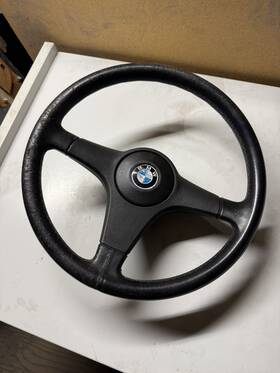
( Manufacturer Part Number: 32339058655 ), ( Items Included: Horn Button, Steering Wheel ), ( Color: Black ), ( Item Diameter: 37 Cm ), ( Material: Leather ), ( Vintage Part: No ), ( Type: Steering Wheel ), ( Oe/oem Part Number: Bmw E30 Oem, 32339058655, 32331155031, 32331154077, 82, 83, 84, 85, 86, 87, 88, 89, 90, 91, 92, 93, 94, 95, 316 316i 318i 318is 320i 320is 323i 324d 324td 325e 325i 325ix M3, 525ix ), ( Manufacturer Warranty: No Warranty ), ( Features: Factory Bmw Oem ), ( Country Of Origin: Germany )
Review BMW Sport Leather Steering Wheel Oem fits E30 E34 E28 E24 E23 E32 1982–1995
The BMW 323i (model codes 82-95, encompassing the E30, E34, E28, E24, and E32 chassis generations) with the iconic **82-95 E30 E34 E28 E24 E32 Sport Steering Wheel** represents a rare and highly sought-after piece of automotive heritage, blending performance, craftsmanship, and timeless design. This steering wheel, often referred to as the "sport wheel" or "M-style" wheel, was originally introduced in the mid-1980s as part of BMW s push to enhance driver engagement and distinguish the 3 Series from its competitors. Crafted from high-quality materials, the wheel features a **three-spoke design with a sleek, aerodynamic contour**, accentuated by a **chrome or polished aluminum rim** that exudes a sporty yet refined aesthetic. The center hub is typically adorned with the iconic **BMW kidney grille emblem**, surrounded by a minimalist yet functional layout, with the gearshift paddles (where applicable) and a **wood or leather-wrapped rim** for added luxury. This wheel was not only a visual statement but also a performance-oriented choice, as it was often paired with the **M50/M52 engine** or tuned suspensions, offering a more direct and responsive feel behind the wheel.
The **E30 (1982 1994)** generation, in particular, became synonymous with this steering wheel, as BMW introduced it as part of the **318is and 325is** models, later extending it to the 323i and other performance-oriented variants. The wheel s design was later adapted for the **E34 (1987 1999)**, the **E28 (1985 1994)**, and even the **E32 (1986 1994)** 7 Series, though the latter was more of a luxury iteration. The **E24 (1976 1987)** and **E23 (1974 1983)** generations, while not originally equipped with this wheel, saw aftermarket adaptations of it, further cementing its legacy among BMW enthusiasts. The wheel s **ergonomic shape** and **adjustable height and tilt mechanisms** (depending on the model year) ensured both comfort and precision, making it a favorite among drivers who sought a balance between sportiness and practicality.
Beyond its aesthetic and functional appeal, this steering wheel is a **collector s item**, especially in its original condition, as it was produced in limited quantities and has since become a symbol of BMW s evolution from its early performance-focused era. The **wood or leather trim** (often sourced from premium suppliers like **Alcantara or genuine leather**) adds a touch of exclusivity, while the **chrome accents** and **polished metal finishes** ensure it remains a standout feature in any interior. For restorers and enthusiasts, sourcing an authentic **E30/E34/E28/E24/E32 Sport Steering Wheel** especially one from a high-performance model like the **323i M50, 318is, or 325i** is a prized addition, as it enhances both the car s visual appeal and its driving dynamics. Whether installed in a **restomod project, a classic show car, or a daily driver**, this wheel serves as a testament to BMW s commitment to blending sportiness with sophistication, making it a must-have for those who appreciate the finer details of automotive craftsmanship.
### **Pros and Cons of Buying a BMW E23/E24/E28/E30/E32/E34 (1982 1995) with a Sport Steering Wheel**
#### **Pros**
1. **Classic BMW Driving Experience**
- The E-series BMWs (especially the M535i, M5, and higher-performance models) are renowned for their precise, engaging, and well-balanced handling. The sport steering wheel enhances this by providing a more direct and sporty feel, making the car feel more responsive and connected to the road.
2. **Strong Engine Options**
- Many of these models (particularly the E30 M3, E34 M5, and E28 M5) come with powerful inline-6 engines (M20, M50, M52, M60) that deliver strong performance for their era. The E34 8-cylinder models (M60) are particularly desirable for their smooth yet spirited V8 power.
- The E23 635i and E28 840i offer luxury and performance in a larger, more refined package.
3. **Timeless Design**
- The E-series BMWs are iconic, with distinctive styling that remains recognizable and desirable. The E30 (1982 1994) is the most collectible, while the E34 (1987 1995) is often considered the pinnacle of BMW s pre-1990s design.
- The E23 (1977 1987) and E28 (1985 1994) are also highly regarded for their elegance and engineering.
4. **Modification Potential**
- These cars are highly modifiable, with aftermarket support for suspension upgrades, engine tuning, and interior enhancements. A sport steering wheel can be part of a broader tuning package to improve driver engagement.
- The E30 in particular has a massive aftermarket, making parts and modifications widely available.
5. **Nostalgia and Collectibility**
- For enthusiasts, these cars represent a golden era of BMW engineering. The E30 M3, in particular, is a highly sought-after classic, with values rising steadily.
- Owning one connects you to a community of BMW lovers who appreciate the brand s heritage.
6. **Reliability (With Proper Maintenance)**
- While not as bulletproof as modern cars, many E-series BMWs can last well over 200,000 miles with regular maintenance. The M-series engines (M20, M50, M60) are particularly durable if kept in good condition.
- The E34 and E28 benefit from more refined engineering compared to the earlier E23 and E24.
7. **Driving Dynamics**
- The E30 and E34 are often praised for their balance of comfort and sportiness. The E30 M3 is a lightweight, nimble car that handles like a dream, while the E34 M5 offers a more luxurious yet still engaging driving experience.
- The sport steering wheel (often from the M5 or M3 models) improves feedback, making the car feel more involved and fun to drive.
8. **Resale Value (For Well-Kept Examples)**
- Certain models (E30 M3, E34 M5, E28 840i) hold their value well, especially if they are in excellent condition. The E30 M3, in particular, is a strong investment for collectors.
---
#### **Cons**
1. **High Maintenance Costs**
- BMWs of this era are not cheap to maintain. Parts can be expensive, and labor costs add up, especially for older models. The E23 and E24 are particularly notorious for rust and electrical issues.
- M-series engines (especially the M20 in the E23/E24) can be thirsty and require premium fuel. The M50 (E30/E34) is more efficient but still not as economical as modern engines.
2. **Rust and Structural Issues**
- Many E-series BMWs, particularly the E23 and E24, suffer from rust, especially in the floor pans, wheel arches, and sills. A thorough inspection is essential before purchase.
- The E30 is more prone to rust than the E34, which was built with better materials.
3. **Electrical and Reliability Problems**
- Older BMWs (pre-1990) are notorious for electrical gremlins, including faulty sensors, wiring issues, and unreliable components. The E23 and E24 are the worst offenders in this regard.
- The E30 and E34 are more reliable but still require vigilance. Common issues include failing alternators, water pumps, and timing belts (critical on the M50/M60 engines).
4. **Limited Modern Safety Features**
- These cars lack modern safety features like stability control, airbags (or have only basic ones), and advanced crash structures. Driving them requires more skill and awareness.
5. **Fuel Economy**
- The E-series BMWs are not known for their fuel efficiency. The E30 M3, for example, gets around 12 15 MPG, while the E34 M5 is slightly better but still not practical for daily long commutes.
- The E23 635i and E28 840i are more efficient but still not as economical as modern cars.
6. **Parts Availability and Cost**
- While parts are available, they can be expensive, especially for rare or discontinued components. The E23 and E24 may require custom or aftermarket parts for certain repairs.
- The E30 and E34 have better parts support, but costs can still be prohibitive compared to modern vehicles.
7. **Driving Comfort (Compared to Modern Cars)**
- While the E30 and E34 are comfortable for their time, they lack the noise insulation, suspension tuning, and refinement of modern cars. Long highway trips can be tiring.
- The E23 and E24 are less refined, with harsher rides and more road noise.
8. **Insurance Costs**
- Classic BMWs can be expensive to insure, especially for high-performance models like the E30 M3 or E34 M5. Comprehensive coverage is often necessary, adding to the cost of ownership.
9. **Driving Experience Limitations**
- While the sport steering wheel enhances feedback, the overall driving experience is limited by the car s age. Power steering assist is often weaker than modern systems, and the gearbox (especially in manual models) can feel less refined.
- The E30 s manual gearbox is legendary but can be harsh in use, while the E34 s automatic is more refined but still not as smooth as modern automatics.
10. **Environmental and Legal Considerations**
- Older BMWs may not meet modern emissions standards in some regions, requiring additional modifications or restrictions on use.
- Some countries have restrictions on classic cars, so it s important to check local regulations before purchasing.
---
### **Conclusion**
Buying an E-series BMW (E23/E24/E28/E30/E34) with a sport steering wheel can be an incredibly rewarding experience for an enthusiast who appreciates classic automotive engineering, driving dynamics, and the joy of owning a piece of automotive history. These cars offer a level of engagement, character, and performance that modern vehicles often lack. The sport steering wheel further enhances the driving experience by providing better feedback and a more direct connection to the road.
However, the downsides high maintenance costs, potential rust and reliability issues, poor fuel economy, and the lack of modern conveniences must be carefully considered. These cars are not practical daily drivers for everyone; they require a significant investment in time, money, and attention to keep them running smoothly. They are best suited for owners who:
- Have a passion for BMWs and classic cars.
- Are prepared for the challenges of ownership (budgeting for repairs, dealing with rust, etc.).
- Enjoy the process of restoring or maintaining a car rather than just using it.
- Can afford the higher insurance and maintenance costs.
If you are looking for a car that is primarily a driver s machine, enjoys the thrill of handling, and doesn t mind the quirks of an older vehicle, an E-series BMW with a sport steering wheel is an excellent choice. If, on the other hand, you prioritize practicality, low running costs, and modern safety and comfort, a classic BMW may not be the best fit.
---
### **Recommendation**
1. **Choose the Right Model Based on Your Needs:**- **For the ultimate driving experience:** An E30 M3 (especially the 1987 1992 models) with a sport steering wheel is a fantastic choice. It s lightweight, nimble, and highly modifiable.
- **For luxury and performance:** An E34 M5 (1988 1995) or E28 840i offers a more refined yet still engaging drive. The E34 M5 is particularly desirable for its balance of power and comfort.
- **For a larger, more luxurious classic:** The E23 635i or E28 840i provides a more spacious and comfortable ride while still delivering BMW s signature driving dynamics.
- **
Details:
Used but working condition.
part #: 32339058655 prices
- $80.00-$486.21
specifications steeringwheelsiiz:
- for models: E30, E34, E28, E24, E23, E32
- for makes: Bmw
- for years: 1982-1995
- mpn: 32339058655
- items included: Horn Button, Steering Wheel
- color: Black
- item diameter: 37 Cm
- material: Leather
- vintage part: No
- type: Steering Wheel
- oe/oem part number: Bmw E30 Oem, 32339058655, 32331155031, 32331154077, 82, 83, 84, 85, 86, 87, 88, 89, 90, 91, 92, 93, 94, 95, 316 316i 318i 318is 320i 320is 323i 324d 324td 325e 325i 325ix M3, 525ix
- manufacturer warranty: No Warranty
- features: Factory Bmw Oem
- country of origin: Germany
general steeringwheelsiiz:
- Car Truck Parts Accessories > Interior Parts Accessories > Steering Wheels Horn Buttons
- condition: Used
returns steeringwheelsiiz:
- policy: No Returns
offer steeringwheelsiiz:
- options: Ship-to-home
- availability: In Stock
- quantity: 1
- best offers: True
- sold: 0
- started: May 15, 2026
payments steeringwheelsiiz:
- money order
- credit card: Visa
- wallet: Paypal
- other
seller steeringwheelsiiz:
- # reviews: 123
- city: Corvallis, Oregon
- rating: 99.0%
shipping steeringwheelsiiz:
- class: Standard
- type: Calculated
- service: USPS Ground Advantage
- carrier: USPS
- transit: 4-11 Days
- cost: $9.35
Bmw 32339058655 Is Similar To:
- 011157 Bmw Bosch Horn High Oem (25.9% similar) It is in great working condition and will fit all E46 coupe convertible sedan model's. If for some reason an item arrives damaged or is not working as described, please directly. You can also day or night. It is important that if you are happy with your service and products, leave us a 5 start ...(August 14th, 2018)
- 012005 Bmw Oem 1996 3 (14.1% similar) Please compare your original part to the pictures for this listing. May fit other years, makes, and model's. Vin WBACD4324TAV40596 year 1996 engine type this listing is for: one used windshield wiper lever from a 1996 bmw 3 series 328I. Item details: most parts are cleaned and all thoroughly ...(October 13th, 2017)
- 01606300089 Bmw 2003-2008 Z4 E85 Steering (35.3% similar) Wrong year,condition,stated, working condition of item. All pictures directed are for illustrations purposes only please send me a message or. Items illustrated are used and will have signs of wear tear contact main st AUTO310...(February 10th, 2017)
- Anti Abs Lock Oem System Dsc Pump Dynamic E66 750 Bmw 745 Brake E65 0265950006 (9% similar) ...(September 19th, 2014)
- 0390201680 Bmw Steering Column Horizontal Motor Actuator Oem (30.4% similar) Free shipping is within the continental us...(September 22nd, 2018)
- 05343 Carbondesign Oem Bmw E46 (25.9% similar) Upper switches included. Oem bmw E46 upper and lower steering wheel trim wrapped in carbon fiber...(March 30th, 2017)
- 0683088 Bmw 428i Sport Steering (40.4% similar) This item came off a 2015 bmw 428I x drive grand coupe with 6000 miles on the odometer. It has nothing to do with us or. Please refer to the photos of item for most accurate. These parts are in fully working condition unless other wise mentioned. Bmw 428I sport steering wheel 3 spoke paddle ...(June 10th, 2017)
- 1 092 038 Bmw Steering Wheel Leather Oem (37.3% similar) This listing is for a bmw oem steering wheel leather will fit no return as exceptions. Please dont buy this for diagnosing a problem, only if you know need the part. Item must be return in the same condition it was received. These parts are not for trouble shooting testing. The part must not be ...(March 4th, 2019)
- 1-1717-01 1171701 Bmw Oem E60 E61 E63 (12% similar) It is important that if you are happy with your service and products, leave us a 5 start positive rating. Warranty because you are buying used parts, only short 90 day testing can be given. Whatever you do sometimes it happens...(February 26th, 2018)
- 1028524 Bmw Rex Steering Wheel Assembly (39.3% similar) ...(August 22nd, 2018)
- 106261118 2007-2010 Bmw 328 Series Steering Wheel Leather Oem 8012d (41.4% similar) Or view all 328 series parts. This will fit bmw 328 series E91 W/O sport pkg, leather, w Miltonic bmw 328 series E90 flash from the camera alters the color visible. Expedited shipping is not available. One person may see a medium gray, the other may see dark gray. Buyer customer cannot arrange their...(December 10th, 2015)