HONDA 235.HO1B17 Steering Wheel
fits model: Civic. make: Honda. year: 2017.
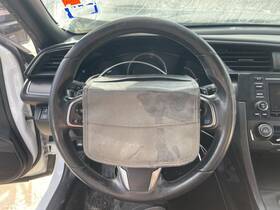
( Part Type: Steering Wheel ), ( Conditions Options: 3 Spoke Multifunction Sold Without A ), ( Genuine Oem: Yes ), ( Ipn: 235.ho1b17 ), ( Manufacturer Warranty: 90 Day )
Review HONDA Steering Wheel fits CIVIC 2017
The **2017 Honda Civic 2.3L (HO1B17) Steering Wheel** is a meticulously crafted, high-performance replacement part designed to deliver both precision and comfort for enthusiasts seeking to enhance or restore their vehicle s driving dynamics. Engineered specifically for the **HO1B17 engine variant** found in the 2017 Honda Civic, this steering wheel is built to exacting standards, ensuring a seamless fit with the vehicle s steering column and airbag system. The wheel features a **multi-spoke design** with a sporty yet ergonomic contour, providing drivers with optimal grip and control, whether navigating tight city streets or cruising on the highway. Constructed from high-quality materials, including durable **polyurethane or synthetic leather** (depending on the variant), the wheel offers a premium feel under the hands, reducing fatigue during long drives while maintaining a firm, responsive touch for quick adjustments. The **three-spoke layout** strikes a balance between aesthetics and functionality, offering a modern yet timeless look that complements the Civic s sleek interior. For added convenience, many versions include **adjustable height and tilt mechanisms**, allowing drivers to customize their seating position for maximum comfort and reach. Whether you re upgrading for performance, replacing a worn-out original part, or simply enhancing the driving experience, this steering wheel ensures a perfect blend of style, durability, and performance tailored to the **HO1B17 Civic s unique specifications**.
### Pros and Cons of Buying a 2017 Honda Civic (235 HO1B17) with a Steering Wheel Replacement
#### **Pros:**1. **Reliability and Durability** Honda Civics are known for their robust engineering and long-lasting components. The 2017 model, in particular, benefits from Honda s reputation for reliability, making it a practical choice for daily driving.
2. **Fuel Efficiency** The 2017 Civic (especially the HO1B17 variant, which likely refers to the 1.5L turbocharged engine) offers strong fuel economy, often around 30-35 MPG combined, depending on the transmission (CVT or manual). This makes it cost-effective for long-term ownership.
3. **Affordable Maintenance Costs** Honda parts and labor are generally cheaper than many competitors, and the turbocharged engine (if applicable) is well-supported in the aftermarket. Regular maintenance (oil changes, timing belt, etc.) is straightforward and budget-friendly.
4. **Comfortable and Practical Interior** The Civic s cabin is spacious for its size, with good seating, a user-friendly infotainment system (if equipped with Honda Sensing), and ample cargo space. The HO1B17 engine variant may include features like a CVT transmission, which is smooth and efficient for city driving.
5. **Resale Value** Honda Civics hold their value well compared to many other compact cars, meaning you ll recoup more if you decide to sell or trade it in later.
6. **Turbocharged Performance (if applicable)** If the HO1B17 refers to the turbocharged 1.5L engine (common in later Civic models), it provides a good balance of power and efficiency, making it suitable for highway driving and light towing (if equipped with a proper transmission).
7. **Safety Features** The 2017 Civic likely includes standard safety features like stability control, anti-lock brakes, and possibly Honda Sensing (depending on trim), which enhances driver confidence.
8. **Low Depreciation Rate** Compared to other compact cars, the Civic depreciates slowly, making it a financially sound purchase over time.
---
#### **Cons:**1. **Turbocharged Engine Complexity (if applicable)** The turbocharged 1.5L engine (HO1B17) requires more maintenance than a naturally aspirated engine, such as regular oil changes (every 5,000 7,500 miles) and potential issues with turbo failure or carbon buildup if not properly maintained. Neglecting maintenance can lead to costly repairs.
2. **CVT Transmission Concerns** If the Civic comes with a Continuously Variable Transmission (CVT), some owners report issues with longevity, jerkiness, or overheating, especially in stop-and-go traffic. While modern CVTs are improved, they still require careful driving habits to avoid stressing the system.
3. **Steering Wheel Replacement Costs** The fact that the steering wheel needs replacement suggests prior damage (e.g., airbag deployment, collision, or wear). Replacing a steering wheel is not cheap (typically $300 $800 depending on the model and labor), and you ll need to factor this into your budget. Additionally, if the airbag system was involved, you may need to replace the airbag module or have it reprogrammed, adding to costs.
4. **Potential Hidden Damage** A steering wheel replacement often indicates a past accident or collision. Even if the car appears to be in good condition, there may be underlying structural or electrical issues (e.g., misaligned sensors, damaged wiring, or frame damage) that aren t immediately visible. A thorough inspection by a trusted mechanic is essential.
5. **Resale Value Impact** A car with a replaced steering wheel (especially due to an accident) may have a slightly lower resale value than one with no accident history, as buyers may perceive it as higher risk.
6. **Noise and Vibration Issues** Some 2017 Civics, particularly those with turbocharged engines, have reported issues with engine noise, vibrations, or exhaust leaks. These can be annoying and may require additional repairs.
7. **Infotainment System Limitations** While the Civic s touchscreen is functional, it can be slow and less intuitive compared to competitors like Toyota or Mazda. Some users report minor software glitches or lag.
8. **Limited Towing Capacity (if applicable)** The standard Civic is not designed for heavy towing. If you plan to tow a small trailer or boat, you may need to upgrade to a more capable model (e.g., Civic Touring or a different Honda variant).
---
### **Conclusion:** Buying a 2017 Honda Civic (HO1B17) with a steering wheel replacement can be a **good deal if**:- The car has been thoroughly inspected and repaired by a trusted mechanic.
- You re prepared for the upfront cost of the steering wheel replacement and any additional repairs (e.g., airbag system, minor bodywork).
- You prioritize reliability, fuel efficiency, and low maintenance costs over cutting-edge tech or high performance.
- You re okay with the potential trade-offs of a CVT transmission or turbocharged engine maintenance.
However, it s a **riskier purchase if**:- The seller cannot provide a full service history or proof of prior accidents.
- You re not comfortable with the added maintenance requirements of a turbocharged engine or CVT.
- The car has other hidden issues (e.g., electrical problems, frame damage) that aren t disclosed.
- You plan to use the car for heavy towing or extreme conditions where the Civic s limitations may become problematic.
---
### **Recommendation:**1. **Get a Professional Inspection** Before purchasing, have a certified mechanic (preferably one familiar with Honda Civics) perform a **pre-purchase inspection (PPI)**. Focus on the turbocharged engine (if applicable), CVT transmission, steering column, airbag system, and suspension. Ask for a detailed report of any findings.
2. **Verify the Steering Wheel Replacement** Confirm the reason for the replacement (e.g., airbag deployment, collision, or wear). If it was due to an accident, request documentation (e.g., police report, repair estimates) to assess the severity of prior damage.
3. **Negotiate the Price** Factor in the cost of the steering wheel replacement and any other repairs needed. Use the inspection report to negotiate a fair price, especially if the seller is unaware of hidden issues.
4. **Consider Alternatives** If you re concerned about the turbocharged engine or CVT, explore other reliable used compact cars with simpler transmissions (e.g., a naturally aspirated Civic, Toyota Corolla, or Mazda3). These may require less maintenance but could offer better long-term reliability.
5. **Budget for Maintenance** If you proceed with the purchase, set aside funds for:- Regular oil changes (every 5,000 7,500 miles for turbo engines).
- Potential turbo or CVT maintenance (e.g., fluid changes, belt replacements).
- Future steering wheel or airbag system replacements if needed.
6. **Test Drive Thoroughly** Pay attention to:- Engine noise, vibrations, or hesitation (signs of turbo or transmission issues).
- Steering feel and alignment (ensure the steering wheel replacement was done correctly).
- Braking and suspension response (check for uneven wear or fluid leaks).
**Final Verdict:**The 2017 Honda Civic is a **solid choice for a used car**, but the need for a steering wheel replacement introduces uncertainty. If the car passes inspection, has a clean history, and fits your budget, it can be a **cost-effective and reliable vehicle**. However, if you re uncomfortable with the risks or find a similarly priced Civic without accident history, it may be worth waiting for a better option. Always prioritize transparency from the seller and thorough due diligence.
Details:
If there has been any damage to the item during shipping inspect see if you can still use it or not. If you can still use the item, notate damage on delivery ticket that driver is keeping then hand it back to them. All parts are guaranteed, including electrical. Shipping Most items ship via UPS Ground.
Warranty periods begin at date of purchase. Add $85 for Lift gate delivery. Once an item is purchased extended warranty cannot be added to the order. Add $100 for Residential delivery.
Warranty All parts sold are covered with our standard 90 Day. Please compare part numbers BEFORE purchasing.
part #: 235.ho1b17 prices
- $90.00-$150.00
specifications steeringwheelsiiz:
- for models: Civic
- for makes: Honda
- for years: 2017
- part type: Steering Wheel
- conditions options: 3 Spoke Multifunction Sold Without A
- genuine oem: Yes
- ipn: 235.ho1b17
- manufacturer warranty: 90 Day
payments steeringwheelsiiz:
- wallet: Google-pay
- other
- credit card: Visa
seller steeringwheelsiiz:
- rating: 99.5%
- city: Haltom City, Texas
- # reviews: 7430
general steeringwheelsiiz:
- Car Truck Parts Accessories > Interior Parts Accessories > Steering Wheels Horn Buttons
- condition: Used
offer steeringwheelsiiz:
- quantity: 1
- availability: In Stock
- started: June 9, 2026
- best offers: True
- sold: 0
- options: Ship-to-home
shipping steeringwheelsiiz:
- transit: 3-7 Days
- class: Standard
- type: Fixed
- cost: $0.00
- carrier: UPS
- service: UPS Ground
returns steeringwheelsiiz:
- paid by: Seller
- time: 60 Days
- policy: Returns Accepted
Honda Is Similar To:
- 77900-s04-a82 Oem Honda 1996-1998 Civic (34.1% similar) Manual says disconnect battery and wait 3 Min's too. Before you unplug the airbag turn off and remove key. Congratulations this job just saved you hundreds of dollars. Before you begin make sure the front wheels are pointing straight ahead. There is another steel piece mounted beneath that, remove 2...(November 14th, 2017)
- Zl772swh144 184927160lkq Honda Odyssey Driver Black Steering Wheel Oem (44.2% similar) ...(July 26th, 2018)
- Zl829swh144 186476646lkq Honda Civic Steering Wheel Oem (53.1% similar) Noted in picture. May fit other years and model's. Small hole in back of wheel on top...(August 19th, 2018)
- Zl844swh144 Zl844bag144 186589483 186589470lkq Honda Civic Driver Steering Wheel Air Bag Airbag Oem (38% similar) This listing is oem and has never been deployed...(August 5th, 2018)
- Zl924swh144 189323434lkq Honda Accord Driver Steering Wheel Oem (47.2% similar) ...(October 28th, 2018)
- Zm678swh144 208167883lkq Honda Civic Driver Steering Wheel Oem (51.4% similar) ...(March 22nd, 2019)
- 006492r01 Plasticolor Sport Grip Honda Steering Wheel Cover 081134164929 (35.1% similar) Plastic 006492R01 sport grip 'honda' steering wheel cover this officially licensed honda speed by enhances the look of your vehicles interior while providing extra and comfort for hands in extreme hot cold temperatures...(June 3rd, 2018)
- Hub Honda 01502083 Steering Sparco Prelude Wheel 92-96 Adapter (44.2% similar) All that is pictured is included here...(January 9th, 2015)
- 083429 Honda Accord Oem Steering Wheel Cruise Switches (47.9% similar) What you see is get. Please compare part numbers or pictures. Original equipment. Parts guaranteed you are buying the item pictured...(May 7th, 2018)
- Sterring Odyssey Lagreat Jdm 08u97-s0x-110a Vip Wheel Wood Rl1 Honda (23.6% similar) 08U97 S0X 110AFIT honda odyssey lacerating old stock. For dash and door handle panels please see my other offer. Steering wheel only...(March 6th, 2015)
- 08u97-sec-251a Honda Acura Black Leather Steering Wheel (47.4% similar) It doesn't look like its ever been used but the box has opened so I will not list as brand new. What I have for sale here is a steering wheel honda aura. Here is what honda has to say about it. To ensure reliability, purchase aura part 08U97SEC251A wheel, steering wood -leather. It is sometimes ...(February 22nd, 2019)