WILLYS JEEP Sheller Steering Wheel 1940S-15-CJ2A 1950S 1960S
fits model: Cj3, Cj5. year: 2015.
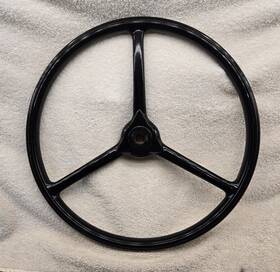
( Brand: Willys Jeep ), ( Manufacturer Part Number: 1940S ), ( Item Diameter: 15 In ), ( Color: Black ), ( Material: Plastic ), ( Vintage Part: Yes ), ( Type: Steering Wheel ), ( Ipn: 1940s 15 Cj2a ), ( Universal Fitment: No ), ( Country Of Origin: United States )
Review WILLYS JEEP 1950s 1960s Inch Sheller Steering Wheel Excellent fits CJ3 CJ5 2015
The **Willys MB/Jeep CJ-2A**, a legendary icon of American ingenuity and wartime mobility, represents the unparalleled versatility and rugged resilience that defined mid-20th-century off-road exploration. Originally designed as the **Barcuda** for the U.S. military in 1941, the MB Jeep quickly became the backbone of Allied operations during World War II, earning its place in history as one of the most influential vehicles of the era. By the late 1940s, civilian versions like the **CJ-2A** emerged, retaining the MB s iconic 134-inch wheelbase, 60-horsepower Go Devil engine, and legendary four-speed manual transmission, all wrapped in a simple yet durable body with a distinctive, boxy silhouette. This model, with its flathead inline-four powerplant and classic Willys straight-six sound, embodies the raw, unpretentious spirit of post-war adventure, offering an unmatched blend of simplicity and off-road capability.
Transitioning into the **1950s and 1960s**, the CJ-2A evolved alongside its more refined successors the **CJ-3** and **CJ-5** while retaining its timeless appeal. The **CJ-3**, introduced in 1953, introduced a slightly longer wheelbase (140 inches) and a more polished, slightly rounded body, though it kept the same Go Devil engine and Willys signature simplicity. Meanwhile, the **CJ-5**, debuting in 1954, became the benchmark for Jeep reliability with its iconic **236-cubic-inch inline-six engine**, producing a robust 60 to 85 horsepower depending on the year, paired with a more robust drivetrain and improved suspension. Both models, however, shared the CJ-2A s legendary **live axle and leaf springs**, ensuring an unshakable grip on rough terrain while maintaining the same no-nonsense approach to off-roading that made the original MB a legend.
One of the most coveted upgrades for these classic Jeeps is the **Sheller steering wheel**, a meticulously crafted reproduction designed to replicate the authentic, handcrafted quality of the original Willys wheels. These wheels, often featuring a **three-spoke design** with a slightly convex shape and polished chrome finish, evoke the vintage aesthetic of the 1940s and 1950s, blending seamlessly with the Jeep s utilitarian charm. The Sheller wheel not only enhances the vehicle s visual appeal but also pays homage to the era when Jeeps were built to last, with every bolt and weld designed for durability. Whether paired with the CJ-2A s raw, wartime simplicity or the CJ-5 s more refined power, the Sheller wheel adds a touch of authenticity, ensuring that every drive feels like a step back in time where adventure was measured in miles, not luxury.
Under the hood, these Jeeps continue to deliver the same **unforgiving yet rewarding** driving experience that has captivated enthusiasts for generations. The **Go Devil engine** in the CJ-2A and CJ-3 produces a throaty, growling sound that resonates with purists, while the **CJ-5 s inline-six** offers a more substantial torque curve, making it equally capable of hauling heavy loads or conquering steep climbs. Both models feature **manual transmissions** with a distinct, tactile shift linkage, rewarding the driver with a deep connection to the road whether navigating a dusty off-road trail or cruising along a scenic byway. The **solid front axle and leaf springs** provide a firm, predictable ride, while the **transfer case** (in later models) unlocks true four-wheel-drive capability, allowing the Jeep to tackle everything from deep mud to rocky trails with ease.
Beyond their mechanical prowess, these Jeeps whether a **CJ-2A, CJ-3, or CJ-5** carry a sense of **timeless freedom** that transcends their era. They were built for soldiers, farmers, and explorers, and their enduring legacy lies in their ability to adapt to any environment. The **CJ-2A** remains the purest expression of Willys wartime design, while the **CJ-5** became the ultimate off-road workhorse, capable of towing, hauling, and enduring conditions that would cripple modern vehicles. With the **Sheller steering wheel** as a finishing touch, these Jeeps become more than just vehicles they are **pieces of history**, ready to take the driver on a journey where every turn of the wheel feels like a connection to the past. Whether used for daily driving, weekend adventures, or as a centerpiece in a classic collection, these Willys Jeeps embody the spirit of self-sufficiency, resilience, and unbridled adventure that has made them enduring symbols of American ingenuity.
### **Pros and Cons of Buying Classic Willys Jeeps (1940s 1960s, Including CJ-2A, CJ-3, CJ-5, and Sheller-Steering Models)**
#### **General Pros of Owning a Classic Willys Jeep**
1. **Historical Significance and Nostalgia**
- Willys Jeeps, particularly the original **M38A1 (CJ-2A)** and later **CJ-3/CJ-5** models, played a crucial role in military and civilian history. Owning one connects you to a legacy of rugged reliability and adventure.
- The **Sheller-Steering** conversion (a manual steering gear replacement for easier handling) is a sought-after modification, making older Jeeps more practical for modern drivers.
2. **Rugged Off-Road Capability**
- Willys Jeeps were built for extreme conditions, with solid axles, high ground clearance, and simple mechanical designs that handle rough terrain exceptionally well.
- The **CJ-5** (1954 1983) is particularly durable, with a reputation for lasting decades with proper maintenance.
3. **Modification and Customization Potential**
- The Jeep community is vast, with aftermarket parts available for engines, suspensions, interiors, and even modernizing features like power steering (Sheller-style conversions) or fuel injection.
- Classic Jeeps can be restored to original condition or heavily modified for modern comfort (e.g., roll cages, lifted suspensions, or even modern engines).
4. **Strong Resale Value for Well-Maintained Examples**
- Rare or well-preserved models (especially **CJ-2As, early CJ-3s, or Sheller-Steered Jeeps**) hold value among collectors.
- The **CJ-5** remains the most popular, with a thriving market for parts and restoration.
5. **Simplicity and Repairability**
- Compared to modern vehicles, Willys Jeeps have straightforward mechanical systems, making repairs accessible even for DIY enthusiasts.
- Many parts are still available from specialty suppliers, though some require sourcing from collectors or restoration shops.
---
#### **General Cons of Owning a Classic Willys Jeep**
1. **High Maintenance and Reliability Issues**
- **Rust** is a major concern, especially in older models. Frame rust can compromise structural integrity, requiring frequent inspections and weld repairs.
- **Original engines (Go Devil 6-cylinder, later inline-6s)** are prone to wear over time, often requiring rebuilds or replacements with modern alternatives (e.g., Ford 302/351, Chevy small-blocks).
- **Transmissions** (especially the original **Bendix or Spicer**) can be finicky, requiring frequent fluid changes and potential rebuilds.
2. **Driving Challenges**
- **Original steering** (on non-Sheller models) is heavy and requires significant effort, making city driving tedious.
- **Brakes** (drum brakes on older models) are less effective than modern disc systems, requiring careful driving on hills or in wet conditions.
- **Suspension wear** (shock absorbers, bushings, and springs) can make the ride uncomfortable over time, especially on rough roads.
3. **Fuel Efficiency and Modern Standards**
- Older Jeeps (pre-1960s) have **poor fuel economy** (around **12 15 MPG** for the Go Devil engine).
- **Emissions and smog compliance** can be an issue in some regions, requiring modifications or exemptions.
- **Modern fuel standards** mean older engines may struggle with higher-octane fuels or ethanol blends.
4. **Cost of Ownership**
- **Parts can be expensive**, especially for rare models (e.g., CJ-2A components).
- **Labor costs** add up if repairs require professional mechanics familiar with classic Jeeps.
- **Insurance** may be more costly due to the vehicle s age and potential for high repair bills.
5. **Limited Comfort and Practicality**
- **Interiors** are basic, with minimal sound insulation, poor heating/cooling, and cramped seating.
- **Storage space** is limited compared to modern SUVs.
- **Modern tech integration** (GPS, Bluetooth, etc.) requires aftermarket solutions.
---
### **Model-Specific Considerations**
#### **Willys MB/M38A1 (CJ-2A, 1940s 1950s)**
**Pros:**- **Military heritage** (used extensively in WWII).
- **Simple, robust design** with a strong following among collectors.
- **Sheller-Steering conversions** make them more driveable.
- **Lower cost of entry** compared to later models (though rare examples can be expensive).
**Cons:**- **Extremely rare** (fewer than 1,000 CJ-2As were made).
- **Original Go Devil engine** is thirsty and prone to overheating.
- **Steering and brakes** are primitive by modern standards.
- **Frame rust** is a major issue in older examples.
**Best For:** Enthusiasts who prioritize history and restoration over daily use.
---
#### **Willys CJ-3 ( 1950 1953)**
**Pros:**- **Last true Willys Jeep** (before Ford took over production).
- **More refined than the CJ-2A** but still retains classic simplicity.
- **Sheller-Steering is common**, improving usability.
- **Strong aftermarket support** for parts and modifications.
**Cons:**- **Very rare** (only 20,000 made).
- **Original wiring and electrical systems** can be unreliable.
- **Suspension and steering** still require effort compared to modern vehicles.
**Best For:** Collectors and those who want a transitional model between military and civilian Jeeps.
---
#### **Willys CJ-5 ( 1954 1983)**
**Pros:**- **Most popular and practical** of the classic Jeeps.
- **Widely available parts** and aftermarket support.
- **Sheller-Steering is common**, making it more driveable.
- **Durable and capable** for both on-road and off-road use.
- **Easier to find in good condition** than CJ-2As or CJ-3s.
**Cons:**- **Still requires maintenance** (rust, suspension, brakes).
- **Original inline-6 engines** can be finicky.
- **Less "vintage" appeal** than CJ-2A/CJ-3 for purists.
**Best For:** Everyday enthusiasts who want a balance of history, capability, and practicality.
---
#### **Sheller-Steering Conversions**
**Pros:**- **Makes steering effortless**, improving city and highway driving.
- **Increases resale value** for older Jeeps.
- **Modernizes the driving experience** without losing the classic look.
**Cons:**- **Expensive** ( $2,000 $4,000 for a quality conversion).
- **Requires professional installation** for proper alignment.
- **Not all Jeeps are suitable** (some frame modifications may be needed).
**Best For:** Anyone who wants to drive a classic Jeep comfortably on a daily basis.
---
### **Conclusion and Recommendation**
#### **Who Should Buy a Classic Willys Jeep?**
- **Enthusiasts who love restoration and mechanical challenges** If you enjoy working on projects and don t mind occasional breakdowns, a classic Jeep can be deeply rewarding.
- **Off-roaders and adventurers** If you prioritize capability over comfort, a CJ-5 (especially with Sheller steering) is an excellent choice for trails and rough terrain.
- **Collectors and historians** If you value the vehicle s legacy and are willing to invest in preservation, a **CJ-2A or CJ-3** could be a unique addition to a collection.
- **Those with mechanical skills or access to a trusted mechanic** Classic Jeeps demand regular maintenance, so you need either the ability or resources to keep it running.
#### **Who Should Avoid a Classic Willys Jeep?**
- **People who want a reliable, low-maintenance vehicle** If you prioritize convenience over nostalgia, a modern SUV or truck would be a better choice.
- **Those on a tight budget** Parts, labor, and potential restoration costs can add up quickly.
- **Daily commuters without off-road needs** Unless you get a **Sheller-Steered CJ-5**, city driving can be tedious due to steering and braking limitations.
- **People who dislike rust and frame issues** Older Jeeps often require extensive rust repairs, which can be costly and time-consuming.
#### **Final Recommendation:**- **Best Overall Choice: Sheller-Steered CJ-5**
- Offers the best balance of **practicality, availability, and off-road capability**.
- With Sheller steering, it s much more driveable than older models.
- A well-maintained CJ-5 can be a **daily driver** for those who enjoy tinkering or have a mechanic to rely on.
- **Best for Collectors/Purists: CJ-2A or CJ-3**
- If you want the **most historically significant** Jeep, a **CJ-2A** is the ultimate, but it s rare and expensive.
- A **CJ-3** is a
Details:
Vintage OEM 1940S 1950s 1960s Willys Jeep 15 Sheller Steering Wheel CJ2A CJ3 CJ5. There is also a slight bulge in the plastic. This is a very nice Steering wheel. Count yours before buying to insure fitment.
It seems some Jeeps were 37 splines and 40. I don't see any cracks. Looks like its original and most likely from a weld on the wire frame. Note: This wheel has 40 Splines.
Please see pictures. Also the taper hole is 11/16 inches in diameter on front and does not have a key way. The spline hole does have some corrosion but it can be easily cleaned up. It doesn't appear that it has ever been mounted.
Shipped FedEx Ground Economy.
part #: 1940s prices
- $125.00-$249.00
specifications steeringwheelsiiz:
- for models: Cj3, Cj5
- for years: 2015
- brand: Willys Jeep
- mpn: 1940s
- item diameter: 15 In
- color: Black
- material: Plastic
- vintage part: Yes
- type: Steering Wheel
- ipn: 1940s 15 Cj2a
- universal fitment: No
- country of origin: United States
seller steeringwheelsiiz:
- city: Kneeland, California
- # reviews: 1461
- rating: 100.0%
shipping steeringwheelsiiz:
- cost: $17.93
- type: Calculated
- service: FedEx Ground Economy
- carrier: FedEx
- class: Economy
- transit: 4-9 Days
payments steeringwheelsiiz:
- credit card: Mastercard
- other
- wallet: Apple-pay
general steeringwheelsiiz:
- condition: Used
- Car Truck Parts Accessories > Interior Parts Accessories > Steering Wheels Horn Buttons
returns steeringwheelsiiz:
- time: 30 Days
- paid by: Buyer
- policy: Returns Accepted
offer steeringwheelsiiz:
- best offers: True
- quantity: 1
- options: Ship-to-home
- sold: 0
- started: June 7, 2026
- availability: In Stock
Willys Jeep 1940S Is Similar To:
- Omix-ada Cj6 Wheel Cj-3b Steering 46-60 Cj5 18031.01 Cj3 Cj-2a Willys Cj-3a (36.7% similar) Ada model NUMBER18031. Outdoor gear bikes, camping gear, etc. That has been used is also not returnable. 01 steering wheel cj 2a cj 3a cj 3b CJ3 CJ5 CJ6 Willys...(December 27th, 2014)
- 914047 Willys Cj5 Cj6 Automotive Mb Wheel Cj-3b Steering Crown Cj-2a Cj-3a Cj3 (38.5% similar) Crown automotive steering wheel cj 2a cj 3a cj 3b CJ3 CJ5 CJ6 MB Willys steering wheel steering wheel steering wheel uses in. In fact, many of the older Jeeps are still on and off the road thanks to crown parts. Crown automotive also offers an exclusive line of component kits and accessory products...(July 4th, 2014)
- Kit-170419-24 Grant Steering Wheel Kit New Jeep Willys (38% similar) The manufacturers warranty shall be exclusive remedy for any such product defect or failure. Please for any questions. Some manufacturers require that you register your product to activate its warranty. Each warranty gives you specific rights, and may have other rights which vary from state...(March 16th, 2018)
- Jeep D-7064 1940s 1950s Willys Horn Button Emblem Steering Wheel Center Cap (50.6% similar) Fast shipping. Check item specifics and photos to ensure you make the perfect choice. They are sold as is, without guarantees of perfection...(November 25th, 2024)
- Crown Automotive Jeep Replacement A6742k Horn Button Kit Fits 41-49 Mb Willys (17.5% similar) Features: horn button kit. Shipping: - shipping within the 48 contiguous USA. I will clearly state whether the item is new, used, refurbished, or open box. Crown automotive is the premiere manufacturer and distributor of quality replacement parts for Jeep r cj, wrangler, Cherokee, grand liberty, ...(February 6th, 2025)
- Crown Automotive L4330247 Horn Button Kit For Jeep Willys 1945-1949 (18.7% similar) Part #: crown automotive L4330247 for sale...(March 27th, 2025)
- Aespares 903558130545 Steering Bell Crank Repair Kit For Jeeps Willys Cj2a 3a 3b Cj5 Cj6 M38 M38a1 S2u (31.4% similar) Free super-fast shipping. Steering components from a Moog automotive repair kit for vintage Jeep. The large metal shaft in the box is a bell crank pin, which typically has 7/8 inch diameter for these specific applications.the smaller component foreground appears to be retaining bolt or stud used ...(May 29th, 2026)